2025 / Future Design Research / Biosensing & Future Intimacy
Cupidastic
What remains beyond measurable attraction?
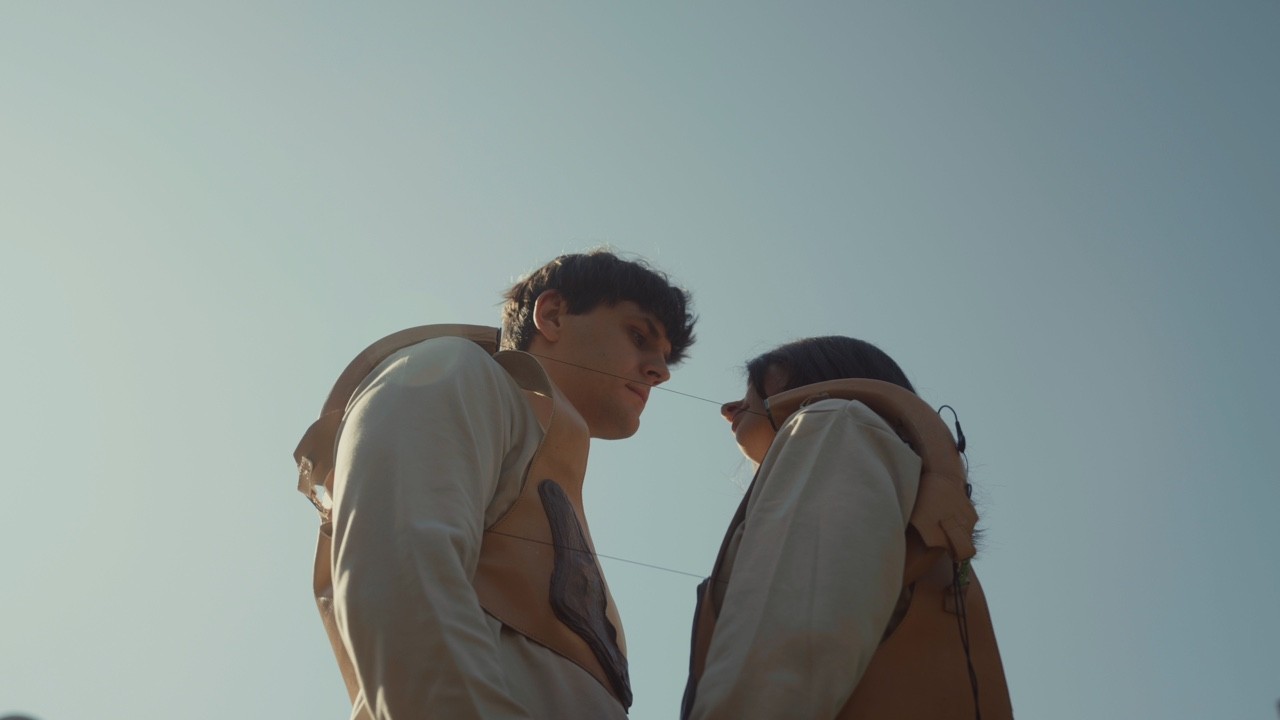
Cupidastic translates future design research into a hug vest, sensing handles, and a film. Literature, an expert interview, and an exploratory workshop informed an encounter built around touch, proximity, and signals open to interpretation.
- Approach
- Research synthesis, expert interview, exploratory workshop, material studies, interaction design and prototyping
- Outputs
- Wearable vest and sensing handles, material and form studies, scenario film
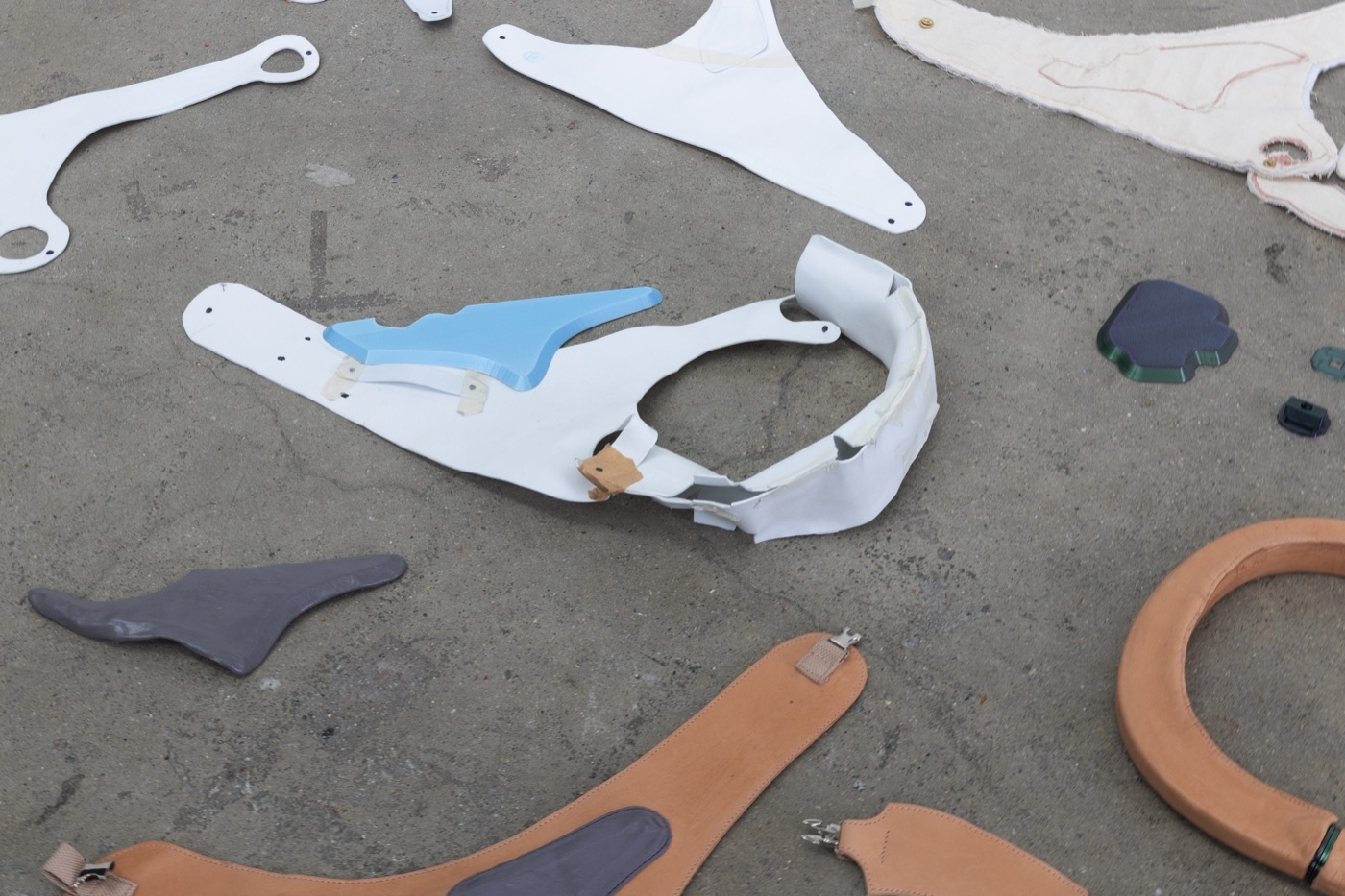
The objects, up close
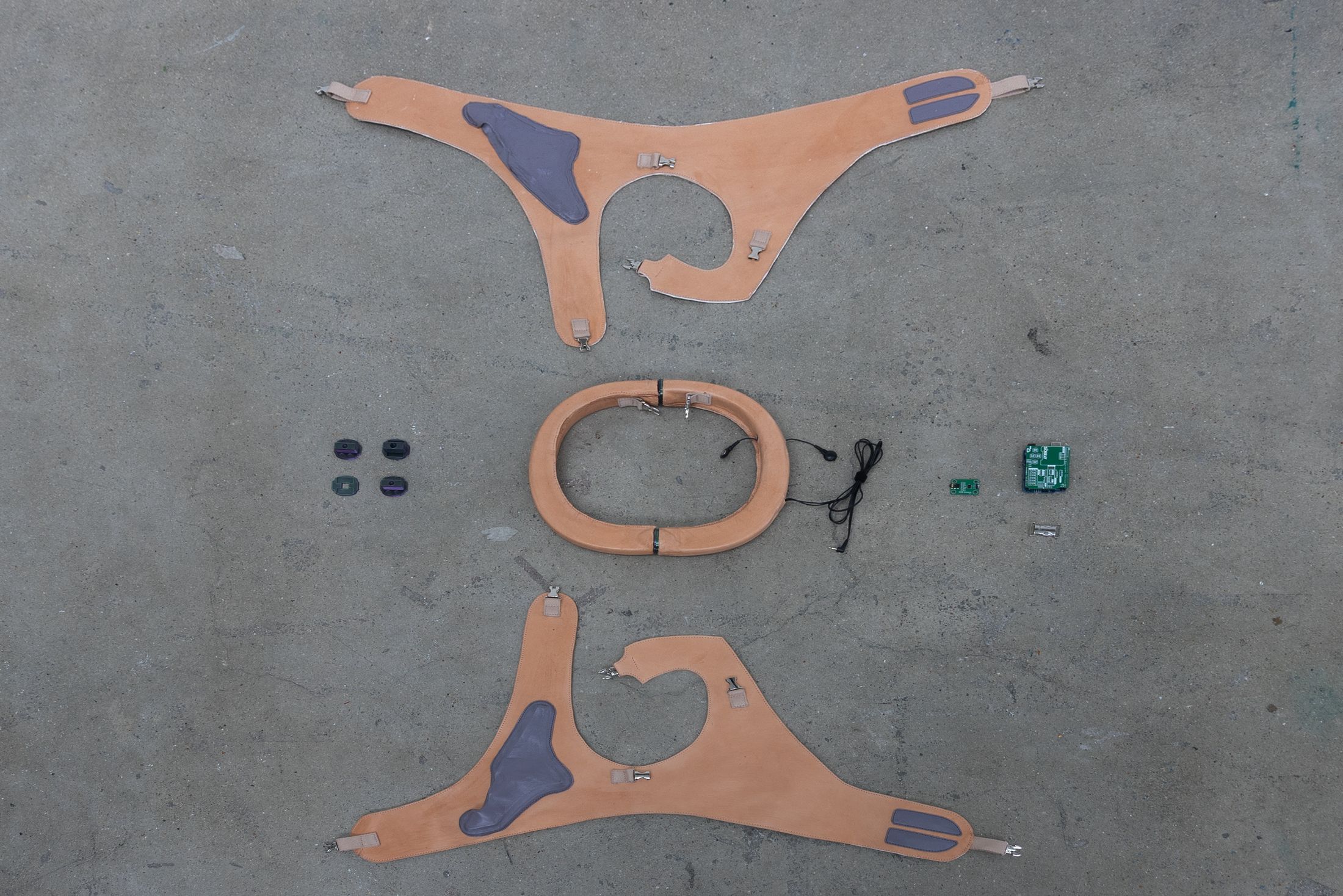






Swipe or use the arrows to explore. Select a photograph to view it in full.
01 / Connecting evidence, defining the question
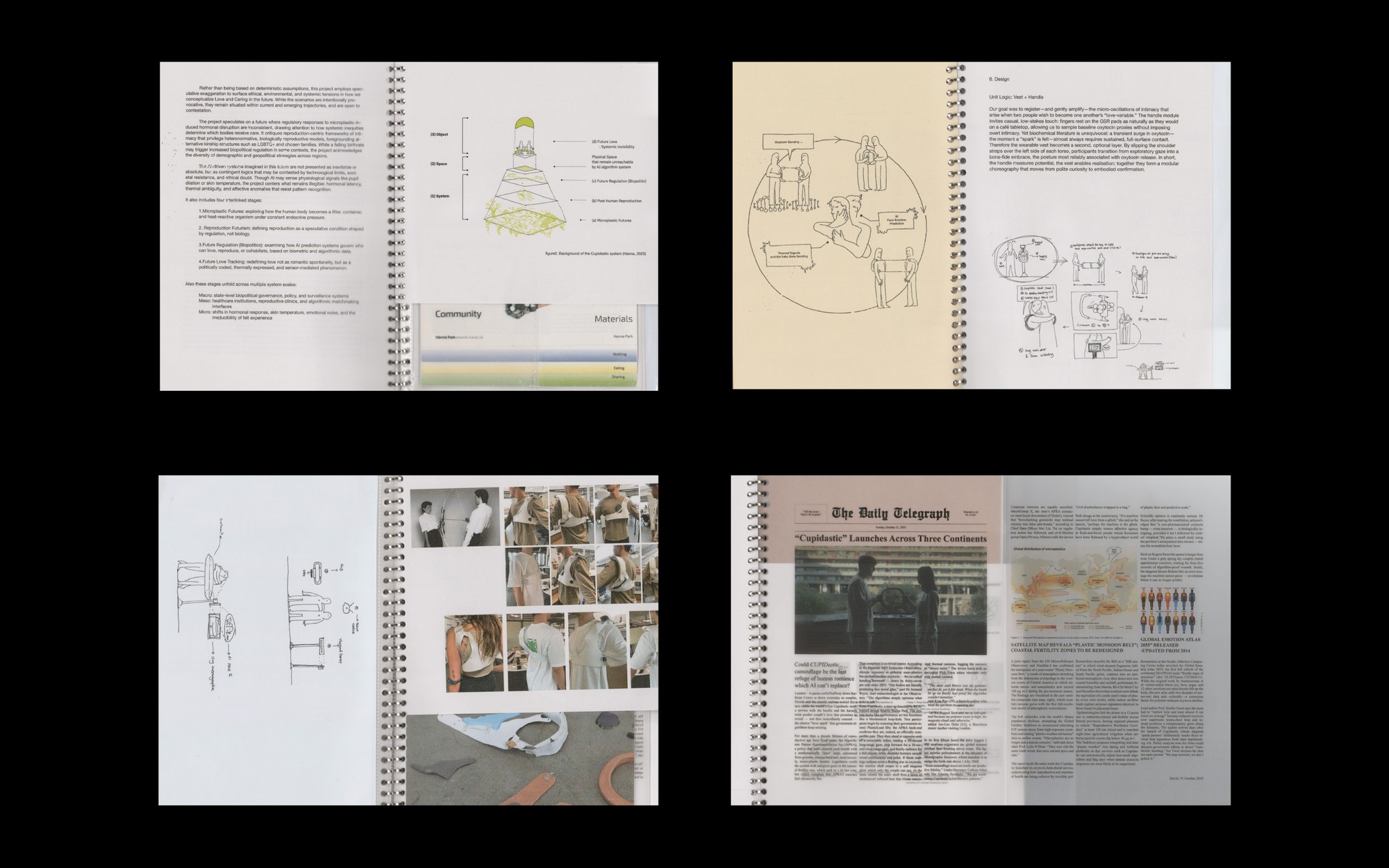
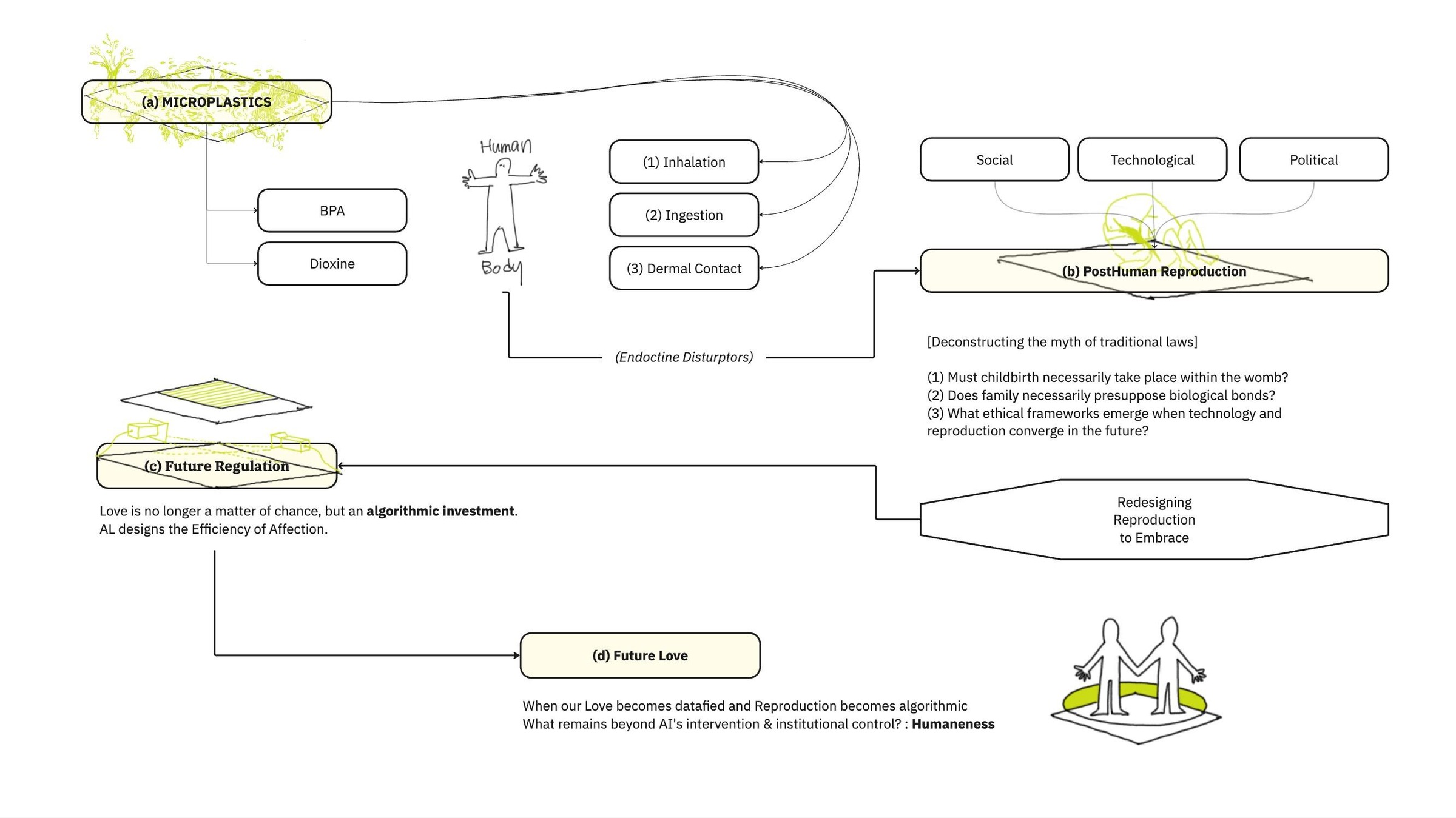
The research connected three fields: environmental exposure, reproductive futures, and data-mediated relationships. Literature review, annotated reading, and visual mapping helped organise a broad subject into a designable question: what happens when intimate decisions are increasingly shaped by bodily data?
An interview with environmental toxicologist Dr Stephanie Wright helped examine the biological assumptions. Animal findings on microplastics and social behaviour, alongside separate fertility forecasts, informed the framing. They do not establish a causal relationship between environmental exposure and human attraction.
Mapping connected these strands to questions of regulation, choice, and intimacy. This narrowed the inquiry from a broad environmental concern to a specific design brief: an encounter in which two people retain room to interpret their own experience.
Research framing and sources
02 / Imagining the conditions, finding the gesture
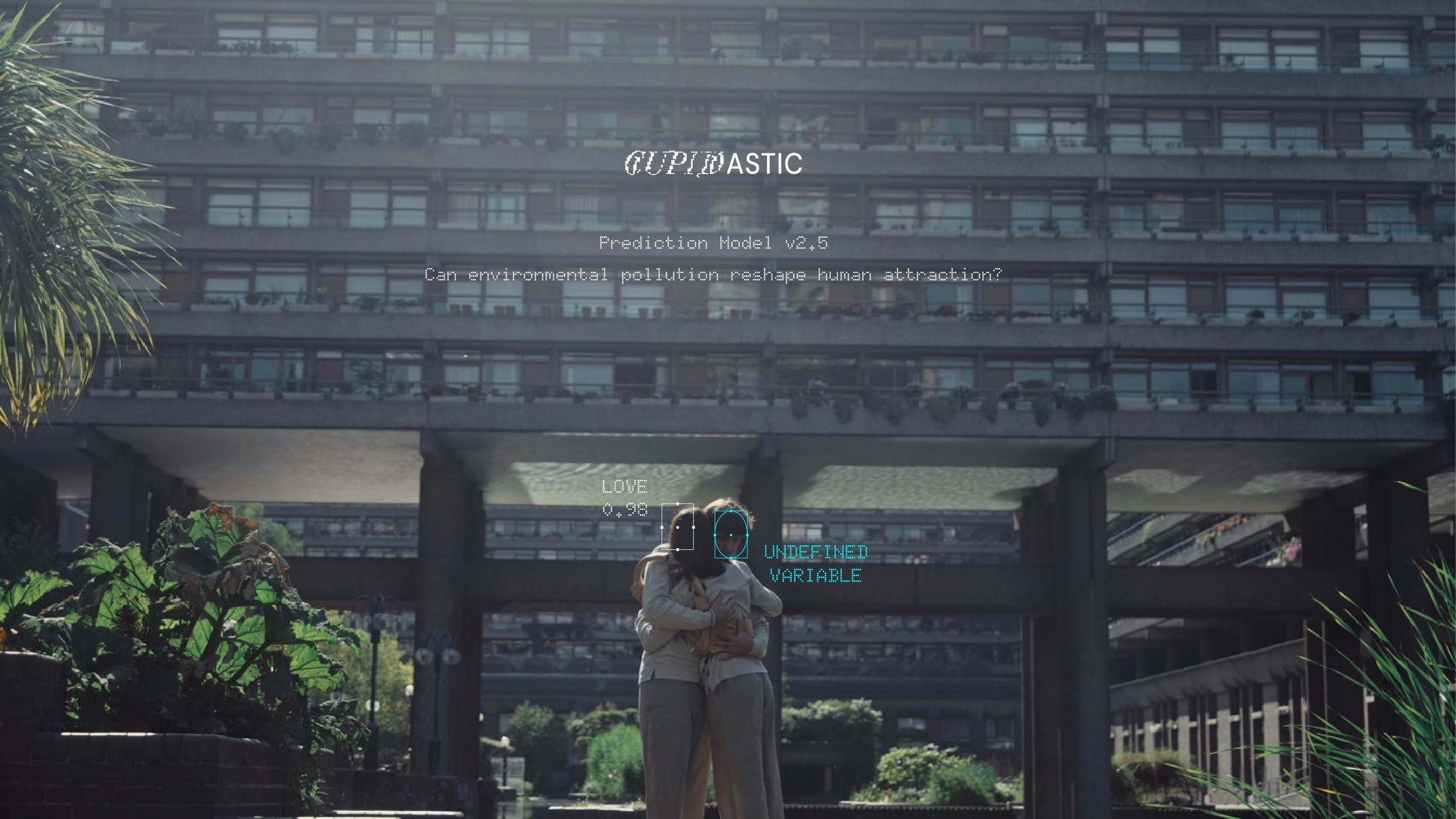
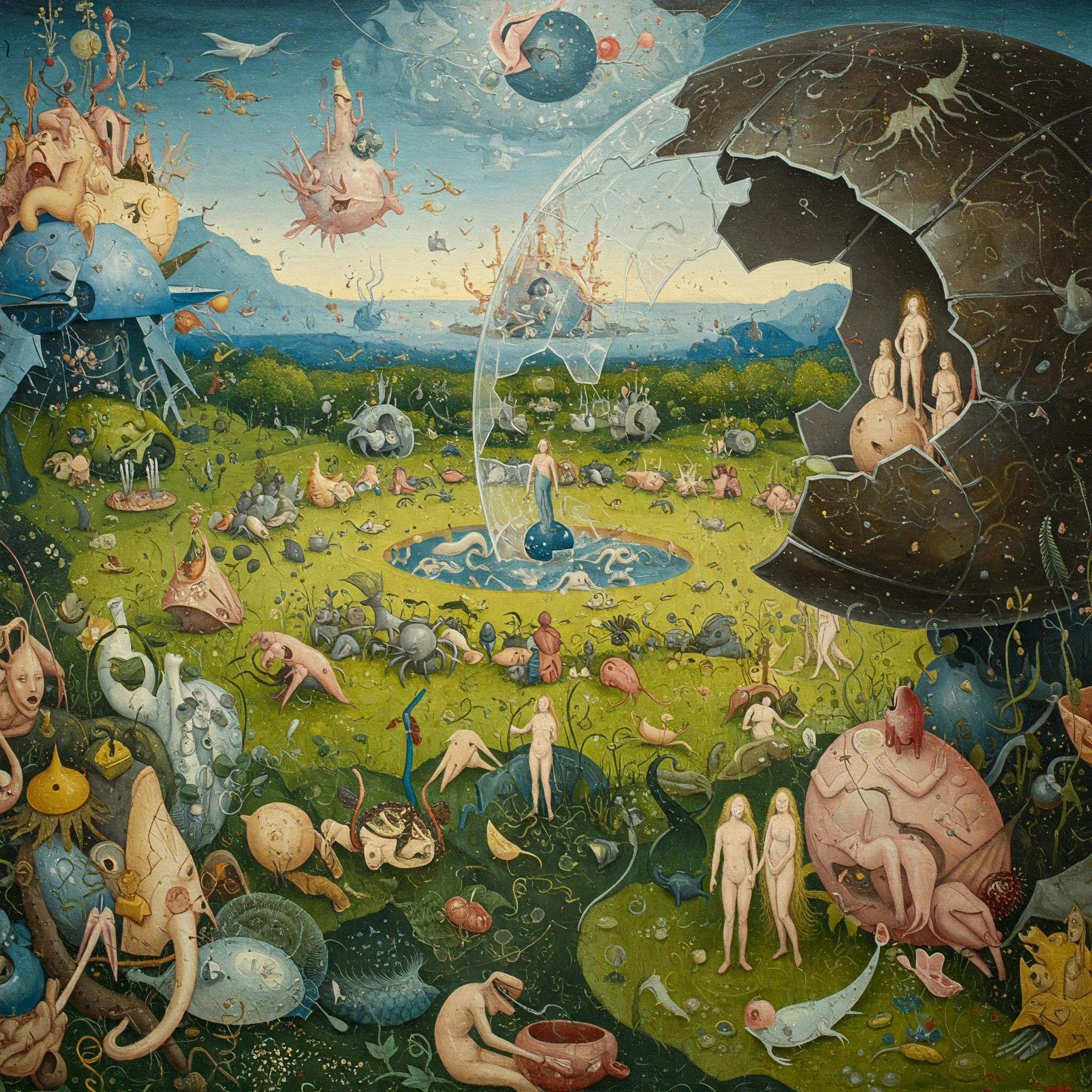
The future setting imagines environmental uncertainty and biological compatibility becoming part of everyday dating. It gives the objects a social context: what would it mean to meet someone when attraction is increasingly scored?
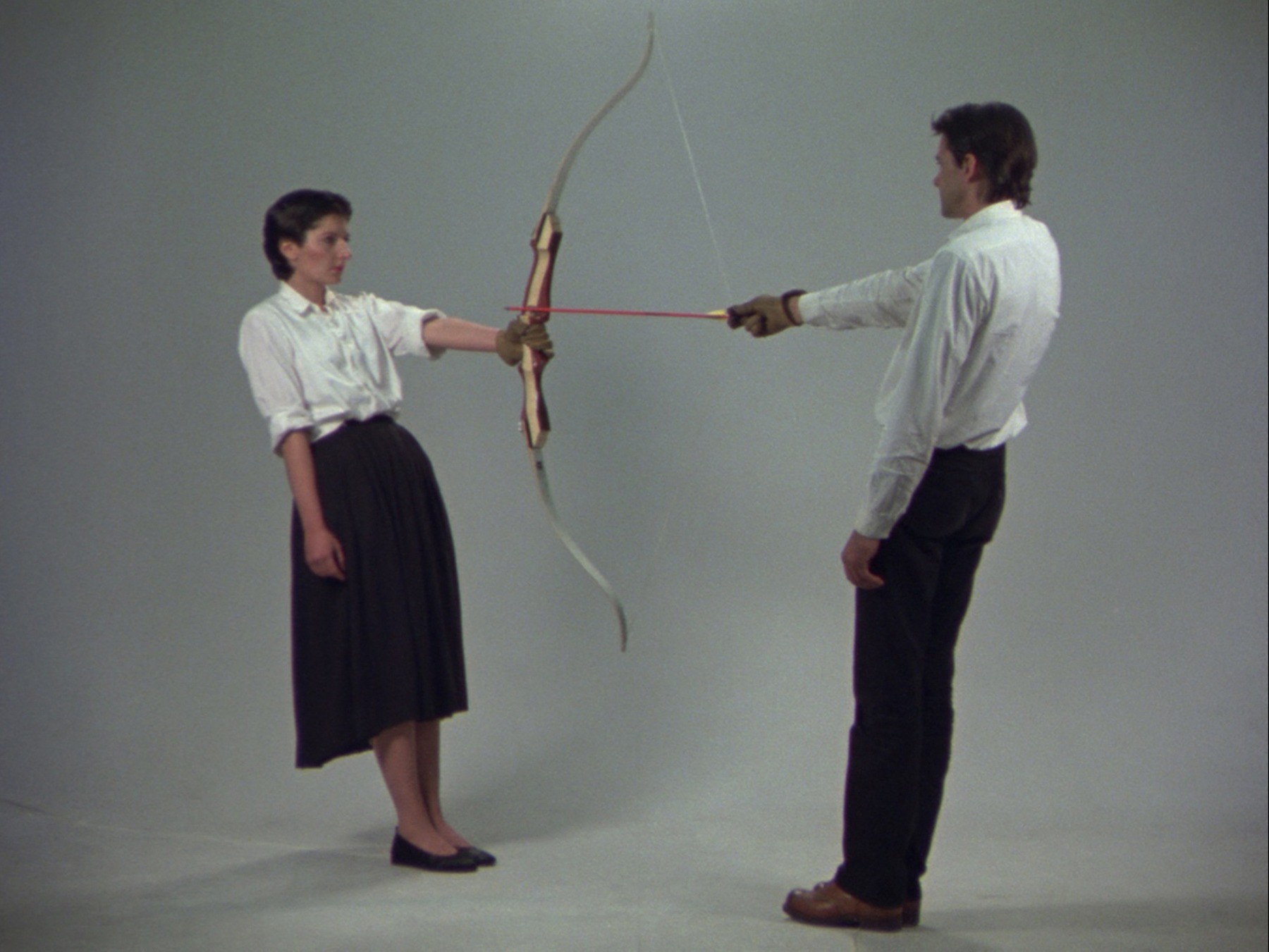
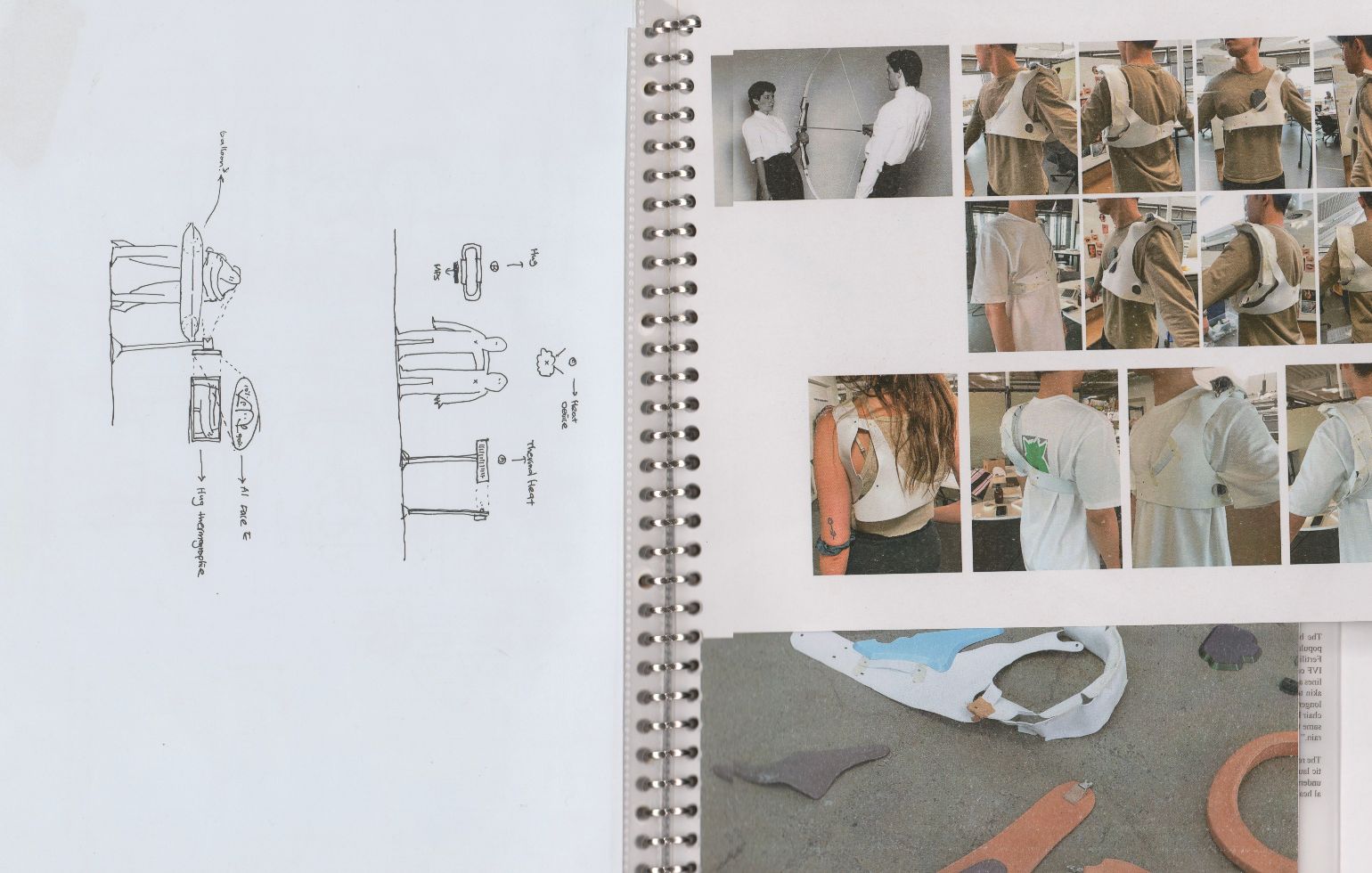
Marina Abramović and Ulay’s Rest Energy (1980) offered a physical reference: two people connected through tension, balance, and mutual dependence. It provided a way to think about a shared object whose meaning emerges through the relationship between bodies.
03 / What happens when an embrace becomes data?
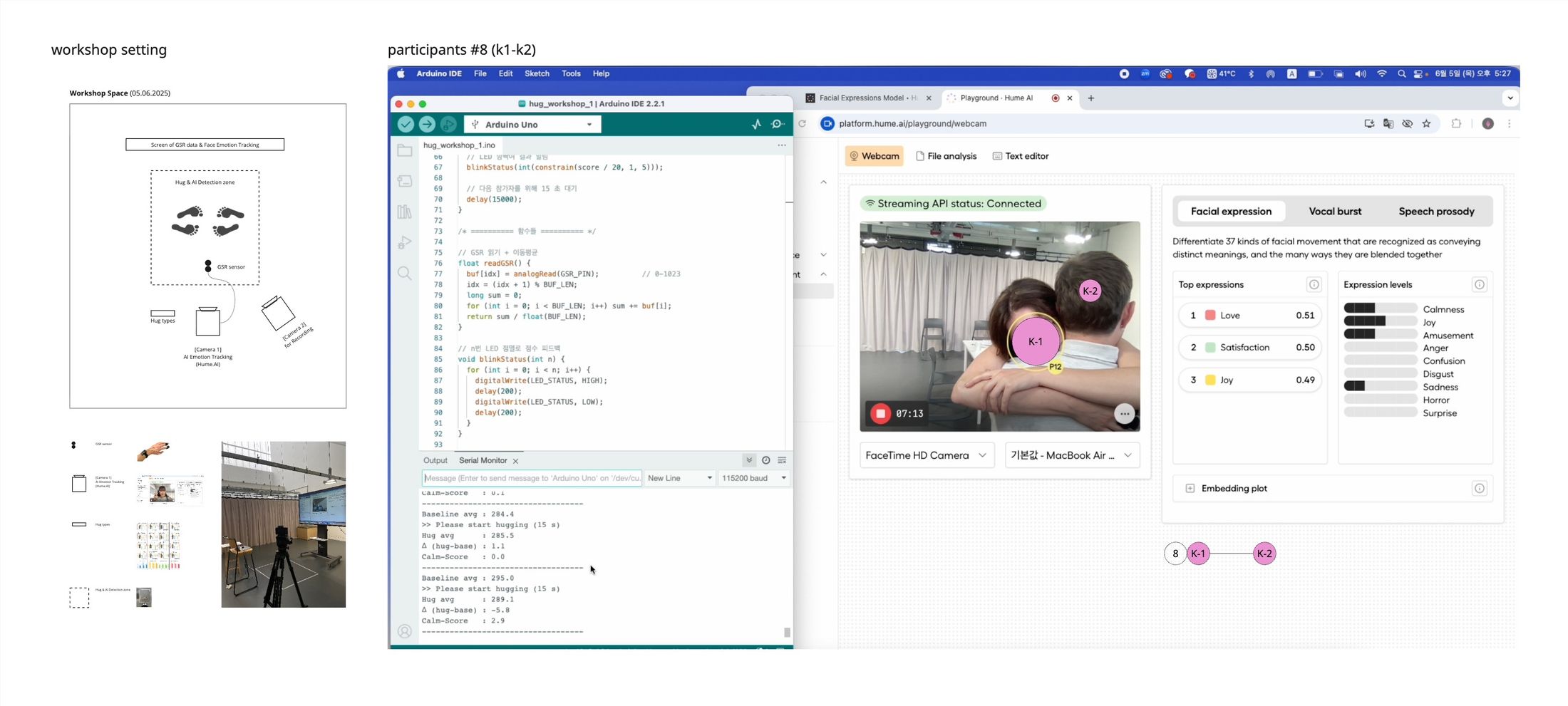
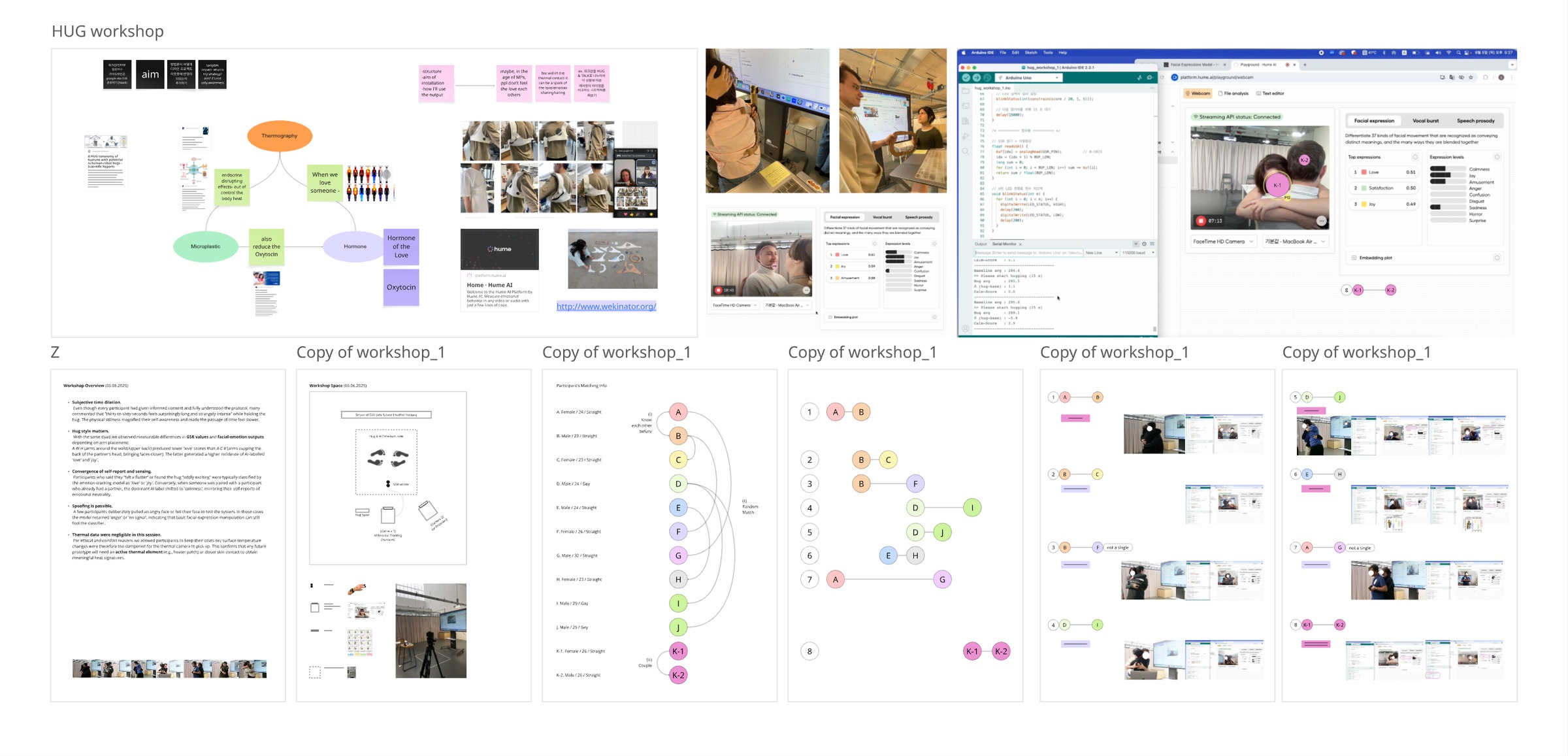
Twelve participants, including acquaintances, assigned pairs, and romantic couples, took part in structured hugging exercises. Galvanic skin response (GSR), Hume.AI facial-expression analysis, observation, and post-session reflections offered physiological, computational, and personal accounts of the encounters.
Responses and computational interpretations varied with the context and relationship. Participants also questioned who should have access to emotional data. Together, these observations shifted the design focus from the readability of signals to the experience and agency of the people producing them.
Workshop protocol and records
04 / From sensing to a shared encounter
Context mattered more than a single reading. The design therefore moved away from a compatibility score and towards signals that two people could interpret together. Touch and proximity became the interface.
Privacy became a criterion for the interaction: keep attention on what participants share with each other. The vest and handheld forms place touch and bodily proximity at the centre of the encounter.
Limits in passive thermal sensing prompted exploration of active thermal feedback in later prototypes. This shifted the role of heat from something to detect towards something to communicate through.
05 / Giving the brief a material form
The design developed through patterns, shaped components, and assembled wearable forms. The vest brings the interaction onto the torso, while handheld sensing objects make contact an active gesture.
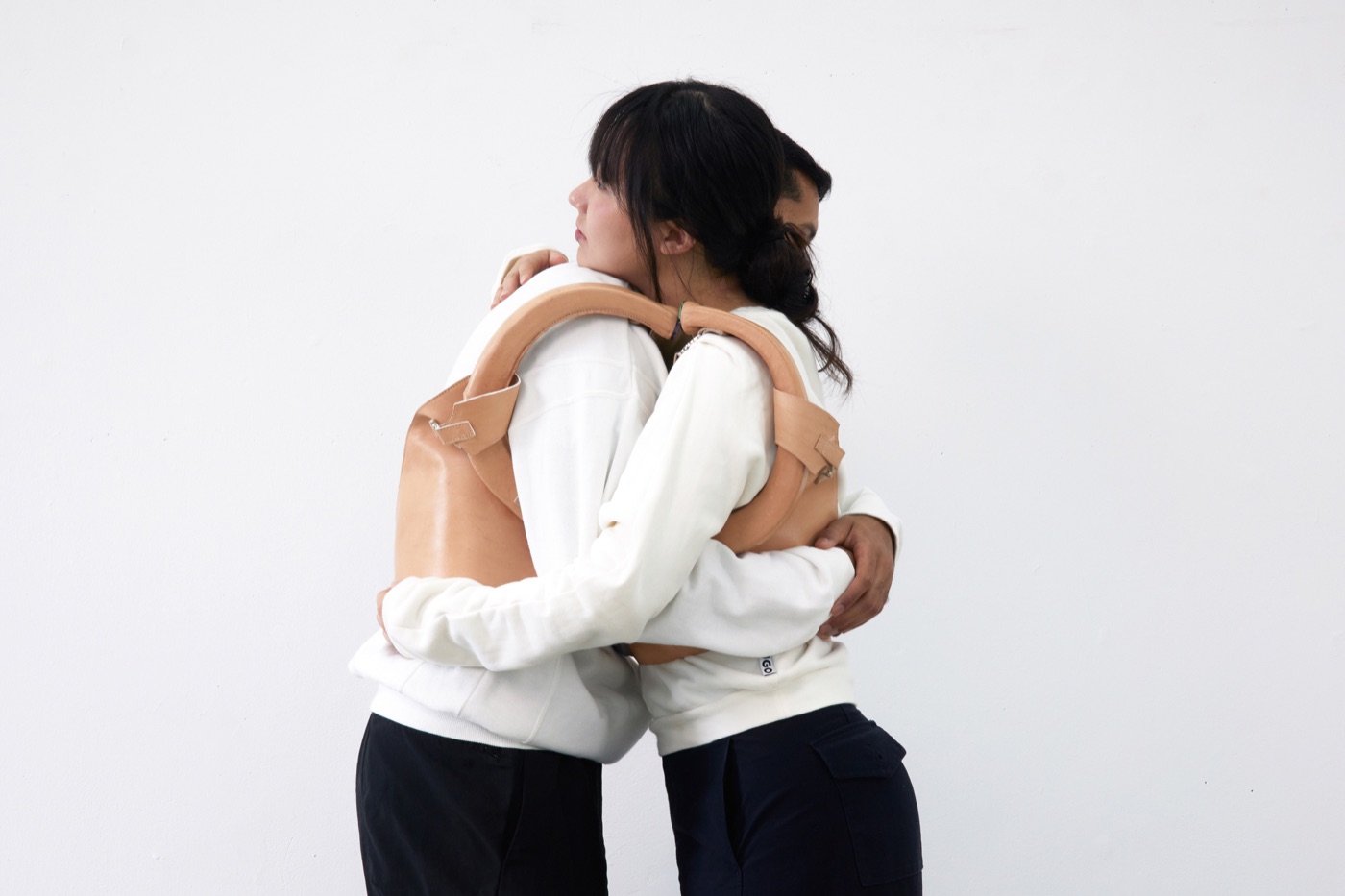
Recycled leather and soft structural components give the system a tactile surface. The material direction brings the brief’s emphasis on bodily contact into the construction, balancing protection and vulnerability.
06 / An experience between two people
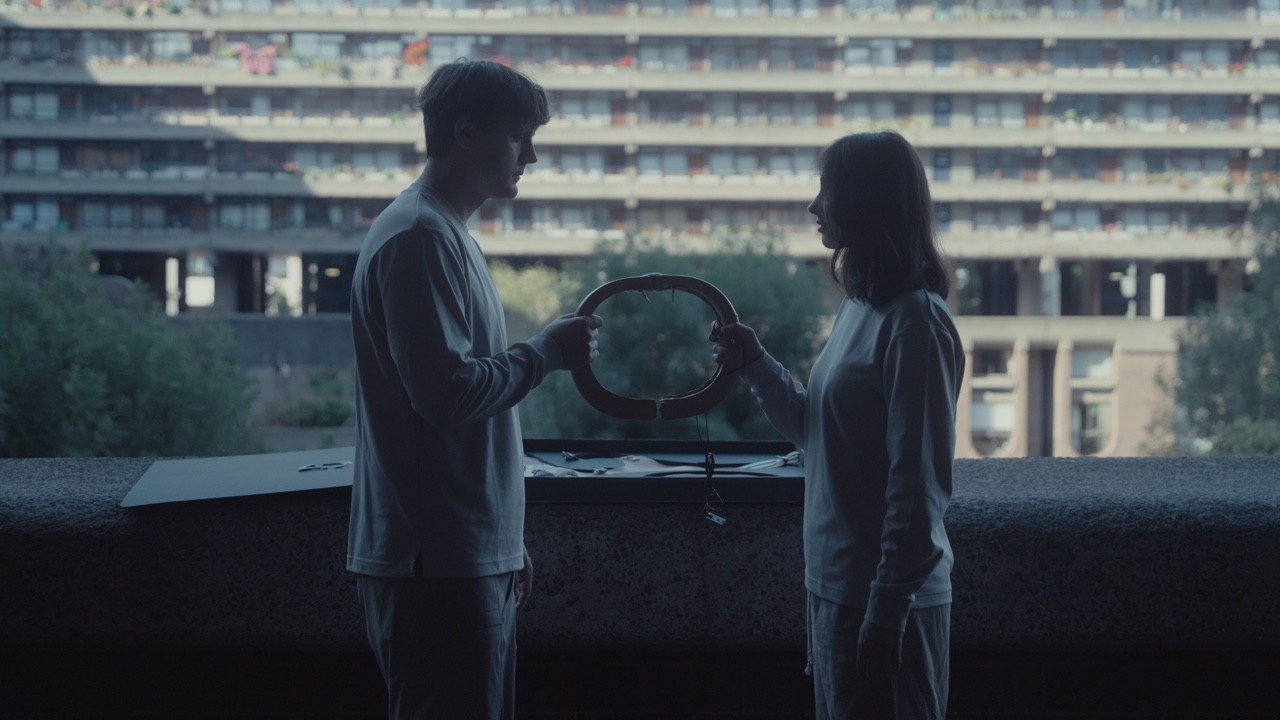
Wearing, holding, moving closer, and embracing give the research a physical scale. The vest and handles form an interface between bodies, with thermal cues explored as a sensory language.
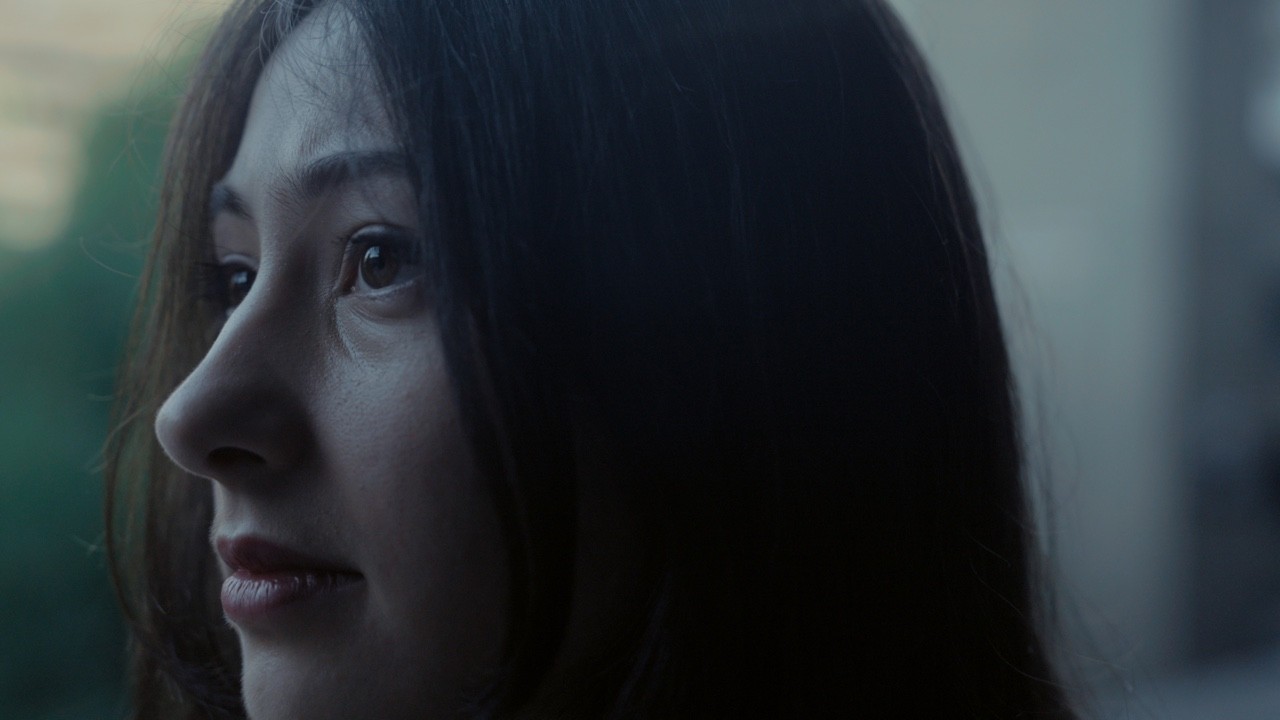
The film places this encounter in an imagined world of algorithmic matchmaking. It makes the social stakes of the objects easier to approach: who interprets a signal, who gets to see it, and how much authority it should carry.
07 / From a complex question to a tangible encounter
The outcome is a connected set of artefacts and media: the wearable makes the brief physical, the workshop grounds it in encounters, and the film gives it an everyday context. Together they make an interdisciplinary question accessible through material and interaction design.
The workshop and prototypes were exploratory. They informed a design direction rather than validating emotion detection or compatibility scoring; emotional privacy remains a design intention. The original archive holds the detailed methods, maps, and references.
Project credits
- Research and design
- Hanna Park
- Video Director
- Jin Roh
- Creative Technologist
- Chanwoo Lee
- Photographer
- Sohee Goo
- Models
- Bettina Man, George Rybi, Vishal Mehta
- Editorial Review
- Ji Yun Kim
- Lead Professor
- Dr. Nazli Terzioglu, Royal College of Art
- Scientific Consultant
- Dr Stephanie Wright, Imperial College London