2024 / Material Research / Ecological Futures
Plastiglomerate to Plastic Futures
How do we learn to recognise the materials of the future?
Plastiglomerate to Plastic Futures investigates how plastic changes environments, everyday practices, and material value. A material archive, bread-making studies, a futures roadmap, film, and collecting-tool proposals translate environmental questions into things people can examine, make, and discuss.
- Approach
- Thames River fieldwork, collecting and sorting, material archiving, comparative material studies, scenario development, film and object-making
- Outputs
- Material archive and book, bread-making studies, plastic futures roadmap, scenario film, conceptual objects and collecting tools
Reading the riverbank
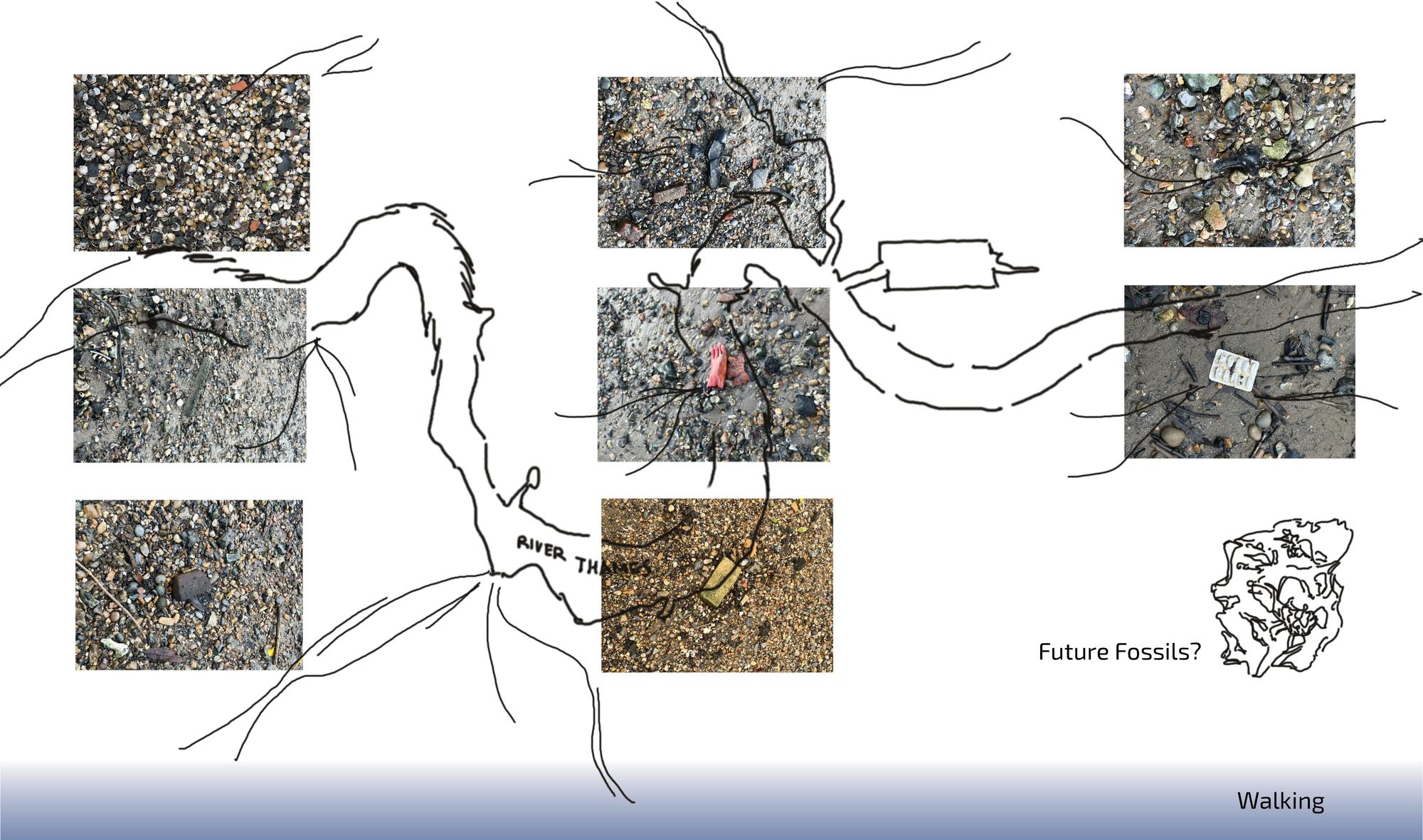
The research began with walking, collecting, and observing along the Thames. Stones eroded by currents, altered shells, fragments of bone, and materials with uncertain origins revealed a landscape shaped by water, weathering, pollution, and urban activity.
The river became a local archive of environmental change. These fragments offered a way into a larger question: how might communities recognise and discuss emerging material conditions before they become distant planetary abstractions? Not every collected fragment was identified as plastiglomerate.
An archive of entanglement
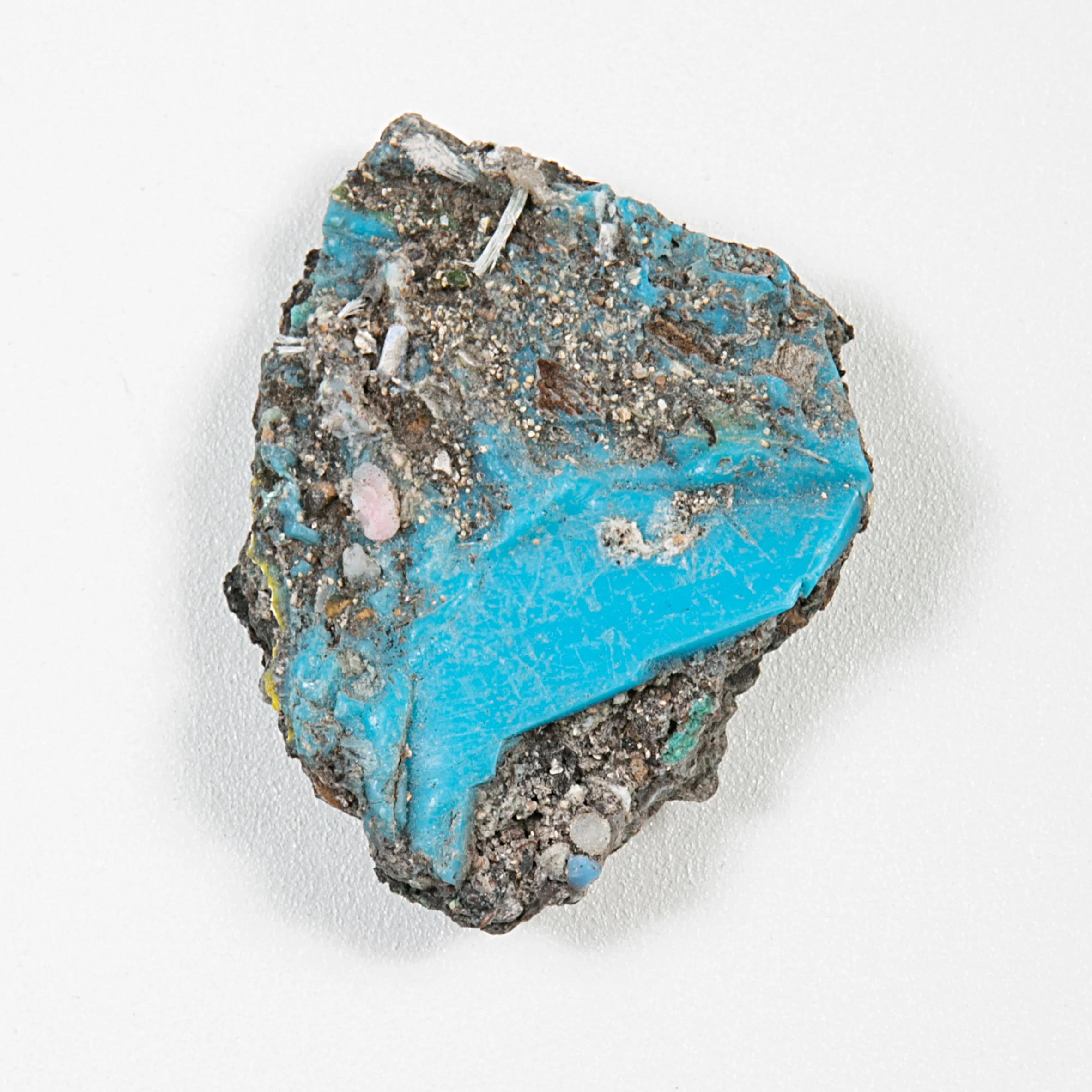
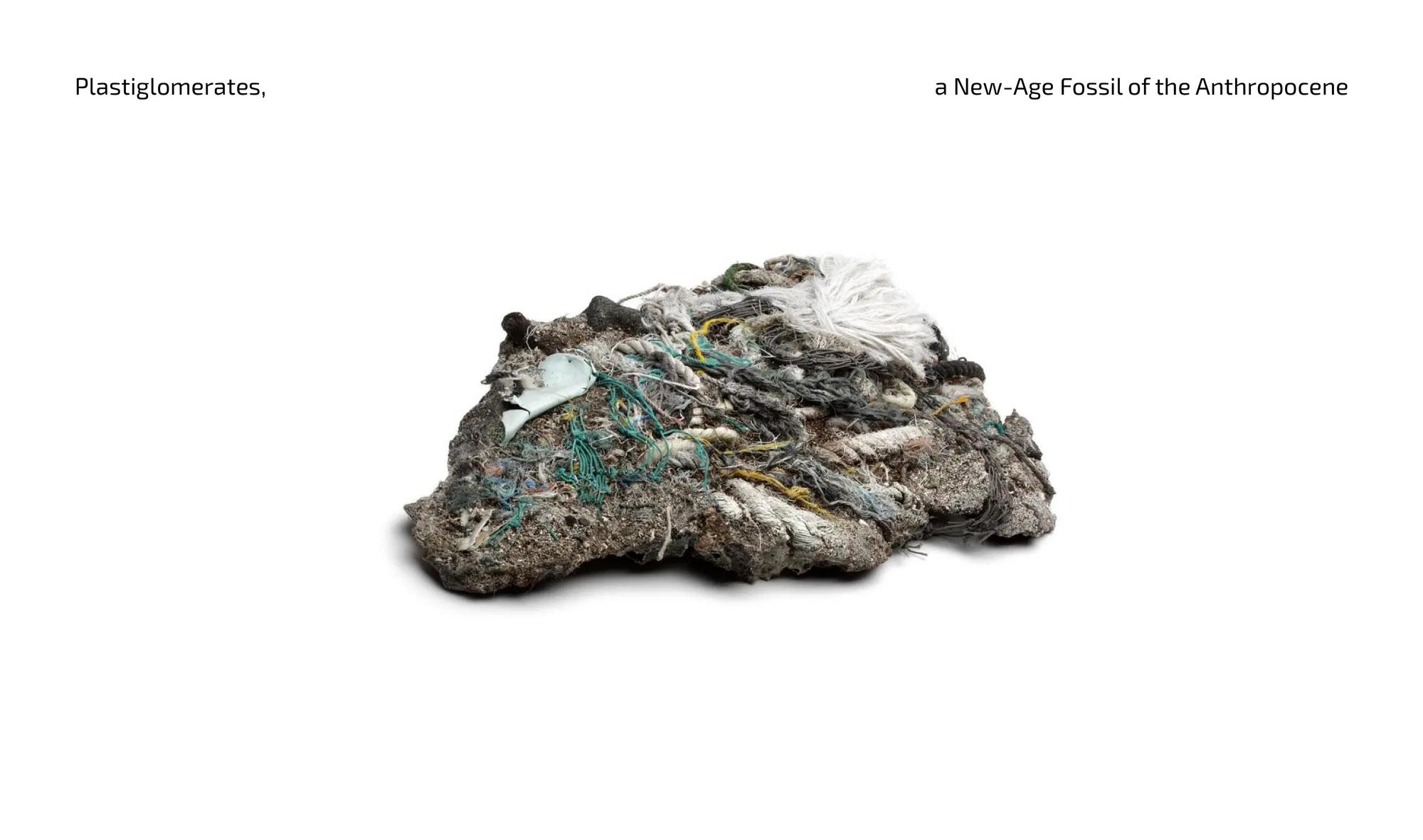
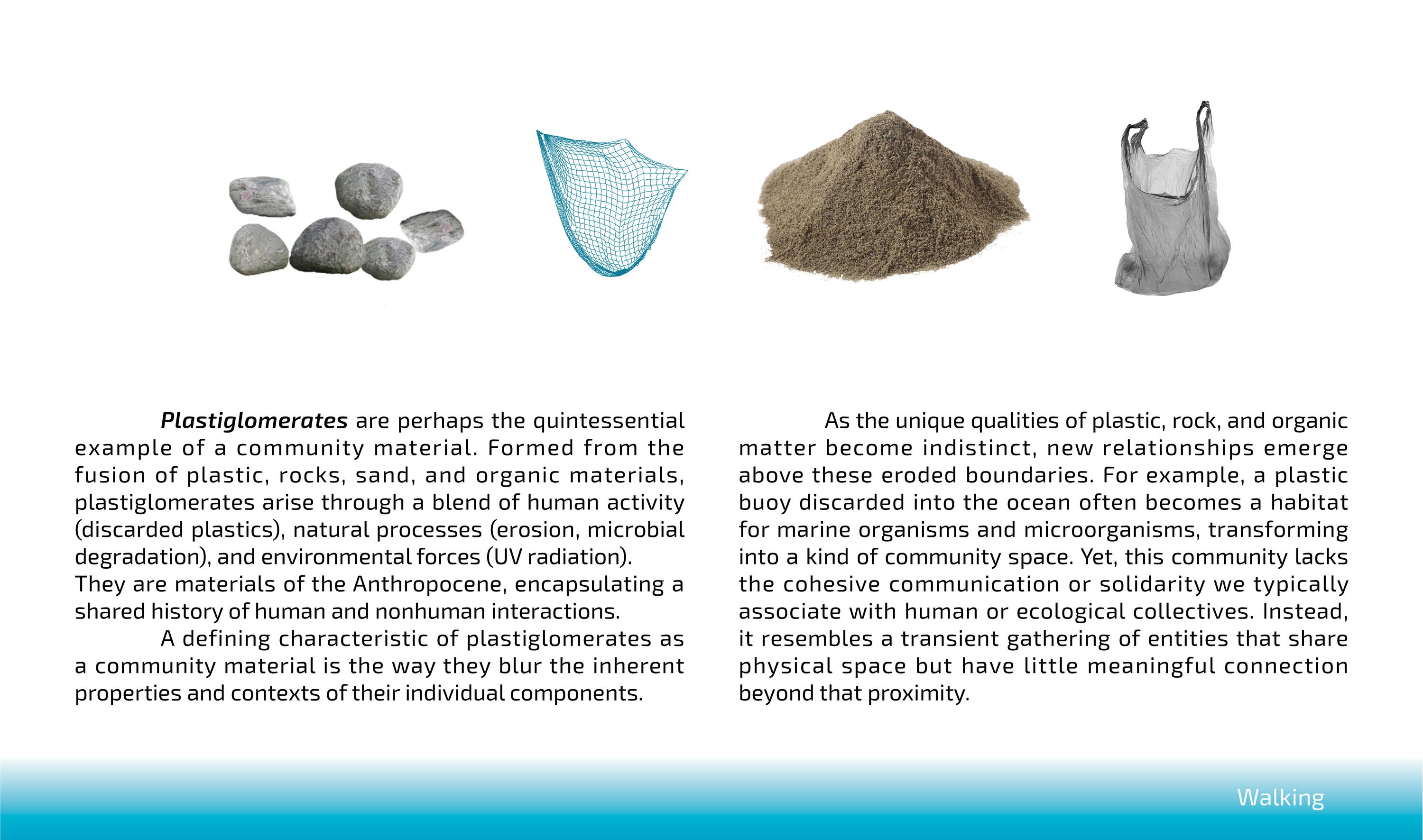
Plastiglomerate forms when plastic melts and bonds with materials including rock, sand, shell, clay, and organic matter. Neither wholly synthetic nor wholly natural, it makes the persistence of human-made waste visible in the matter of a landscape.
Sorting the collection into an archive made uncertain material boundaries visible. This became the basis for comparing how materials come together through environmental processes and deliberate acts of making.
The accompanying material study considers erosion, microbial degradation, and UV exposure, and asks what it means for different materials to coexist. Physical proximity does not necessarily create the care or solidarity associated with a community.
Bread as a public language
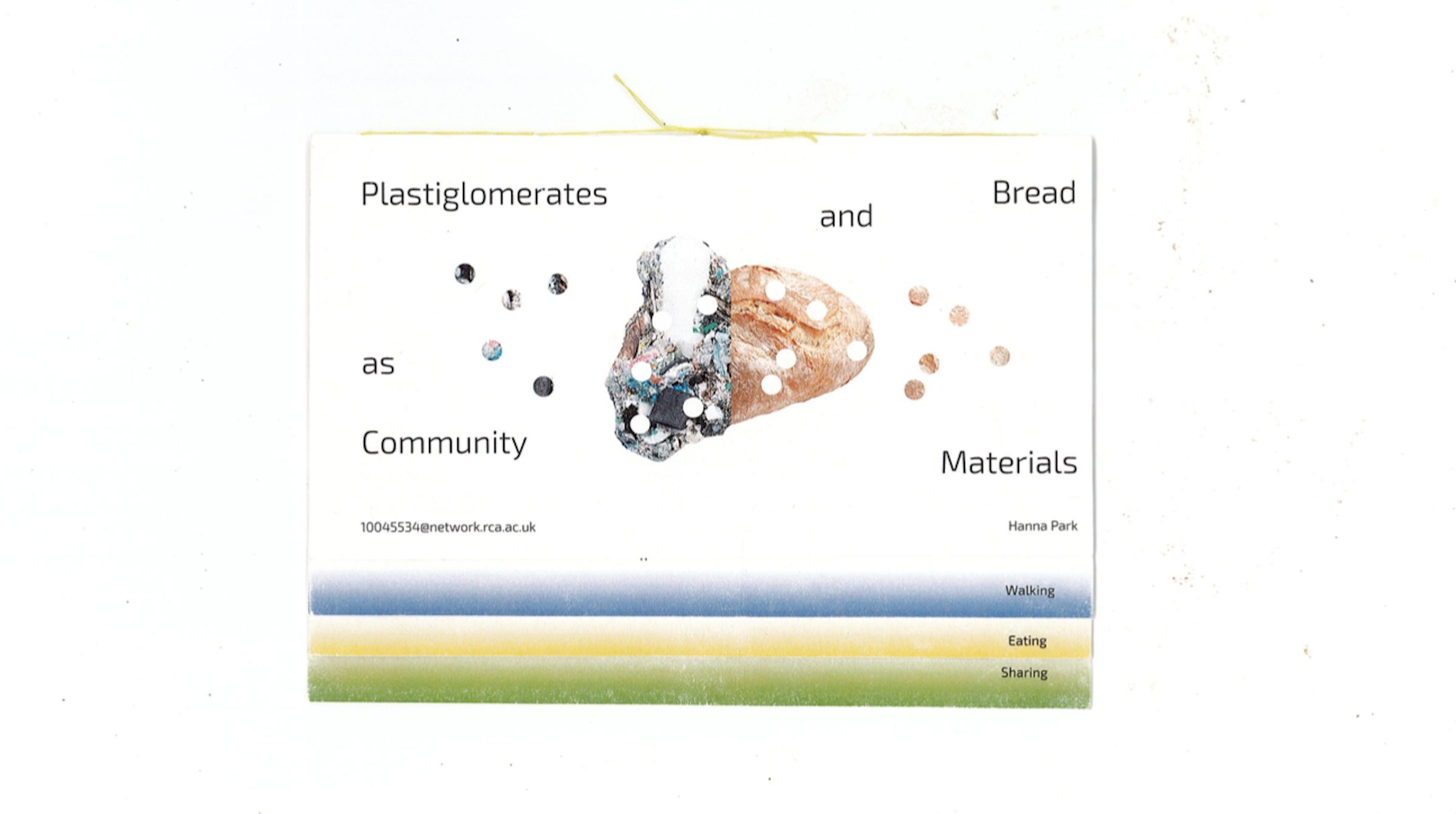
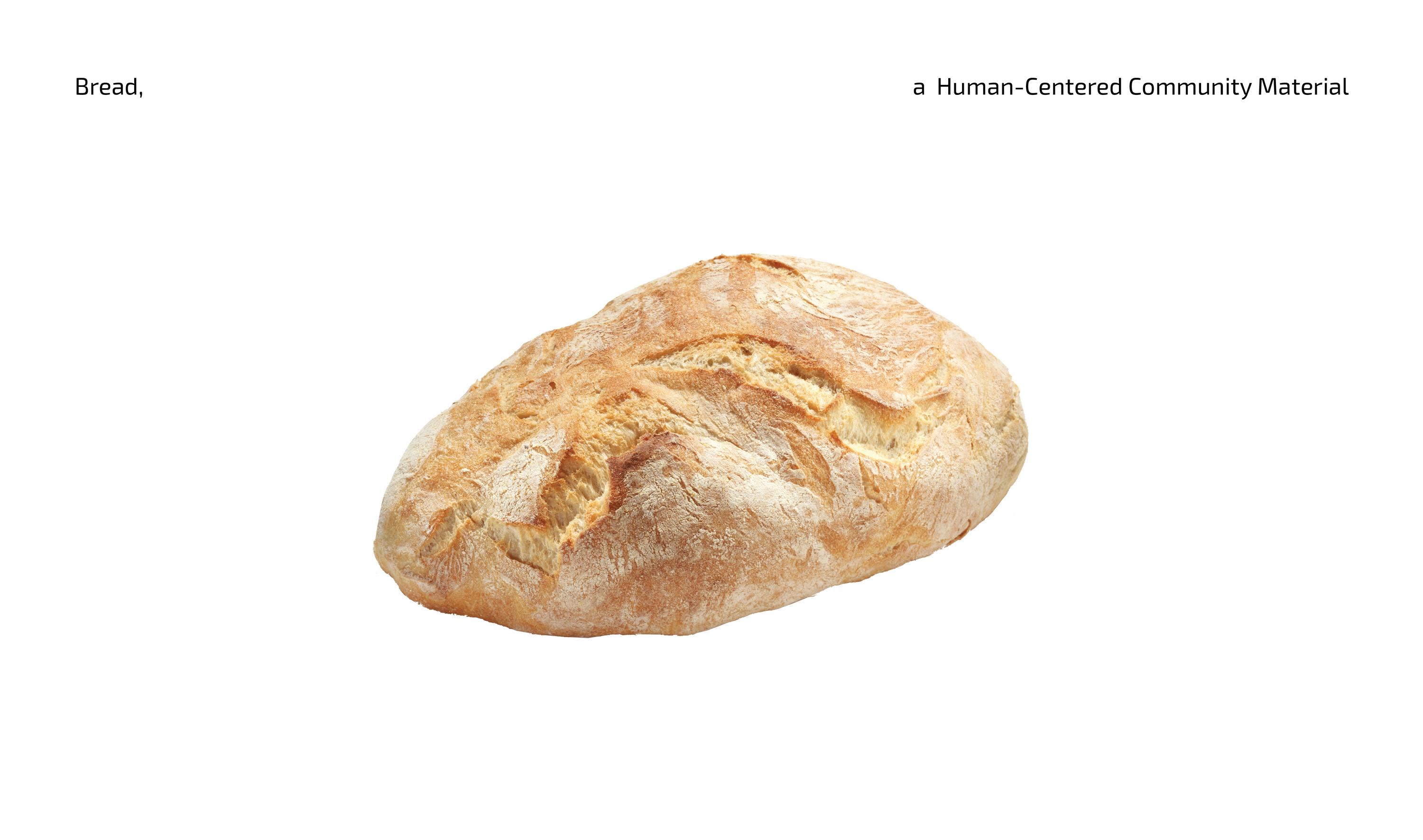
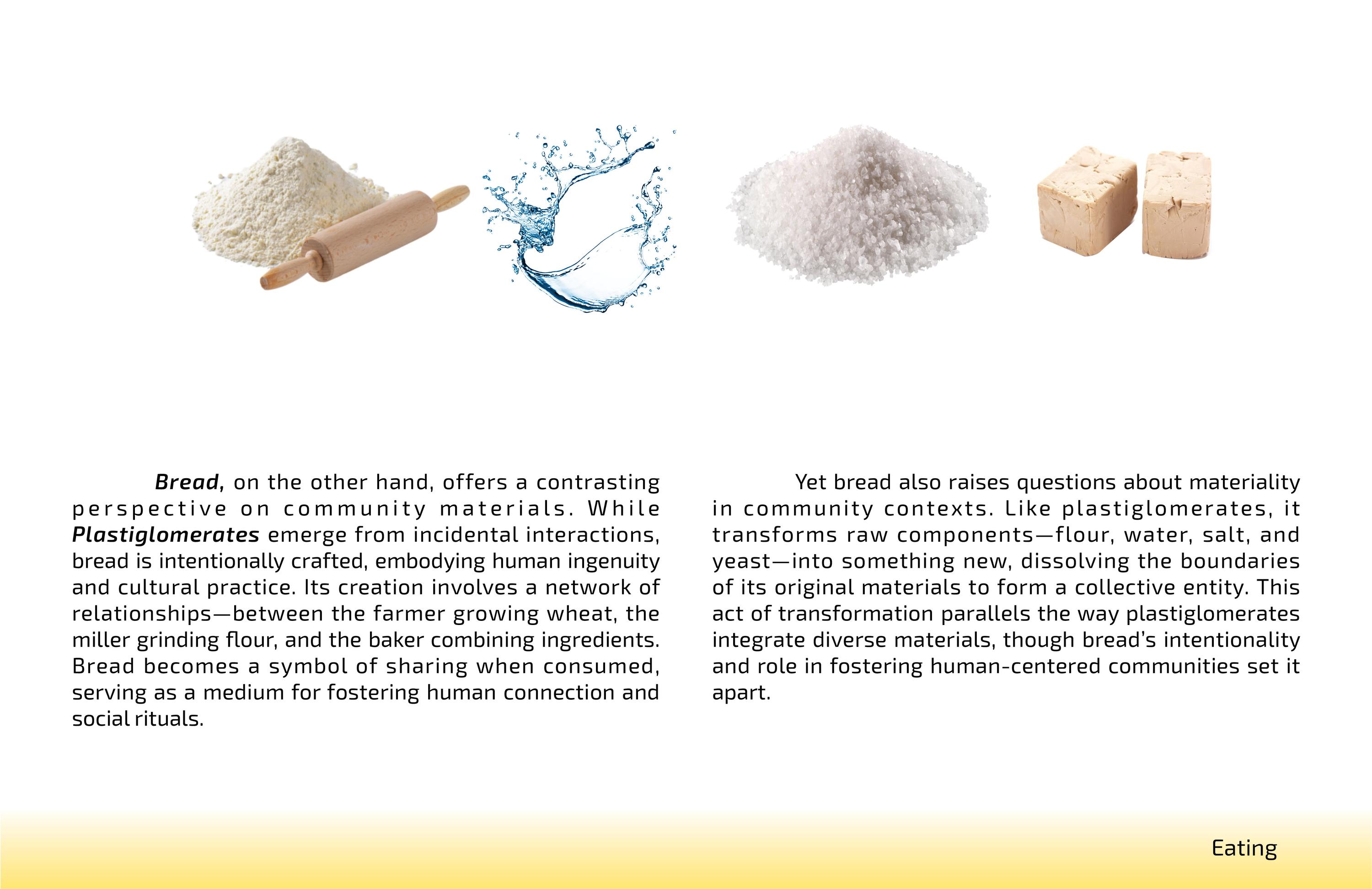
The archive places plastiglomerate beside bread. One is assembled through pollution, environmental forces, heat, erosion, and time. The other is intentionally made through gathering, mixing, kneading, baking, and sharing.
Bread brings flour, water, salt, and yeast into a new material. Its making also connects the farmer, miller, baker, and the people who share it. The comparison distinguishes an accidental material community from a deliberate social one.
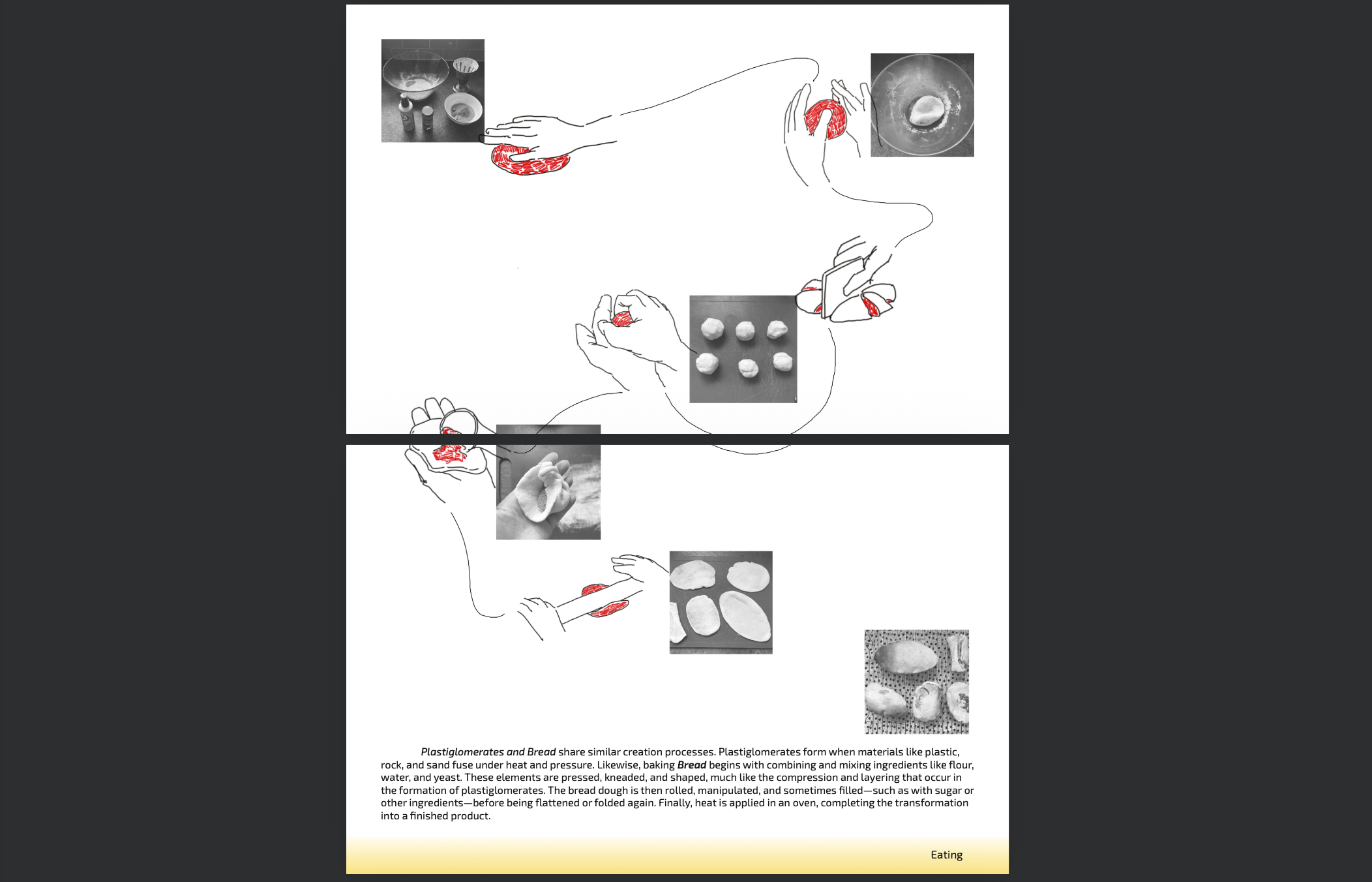
Photographs and drawings trace mixing, kneading, rolling, shaping, and baking. These processes offer a familiar point of entry into unfamiliar material transformations. Through the archive book and food-sharing as a research approach, the project asks what future materials are, who they belong to, and how communities might respond.
Following plastic into future systems
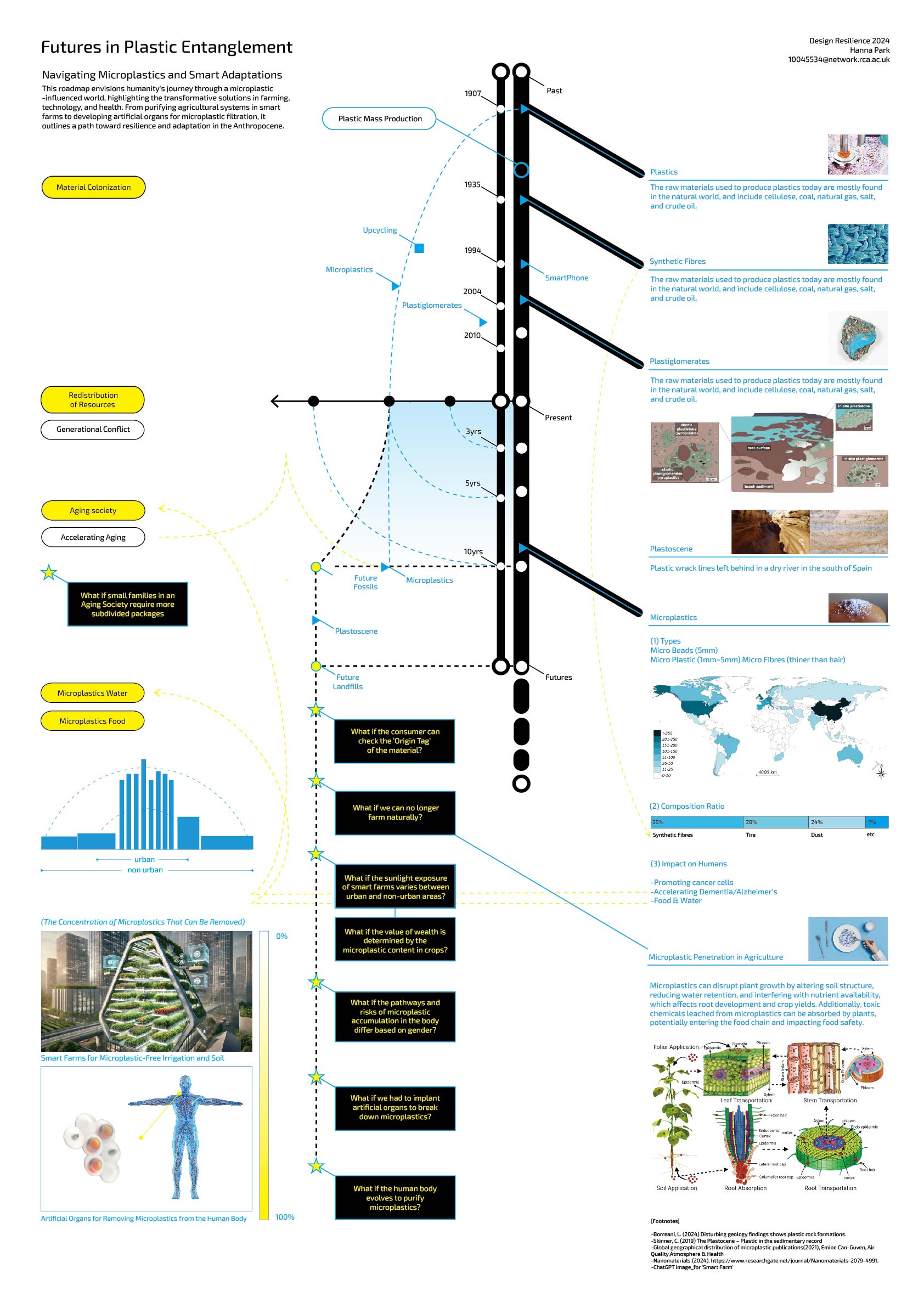
The second phase moves from the riverbank to a roadmap of plastic entanglement. It traces mass production and synthetic fibres through microplastics, plastiglomerates, future landfills, and bodily accumulation, connecting geological change with agriculture, food, water, air, and the body.
Questions about agriculture, filtration, bodily adaptation, and material provenance turn this map into a set of design directions. What infrastructures and inequalities might emerge if living with contamination became an everyday condition?
The roadmap develops possible scenarios rather than scientific forecasts. It expands the inquiry from the material fragment to the systems through which plastic circulates.
A future encountered through objects and film
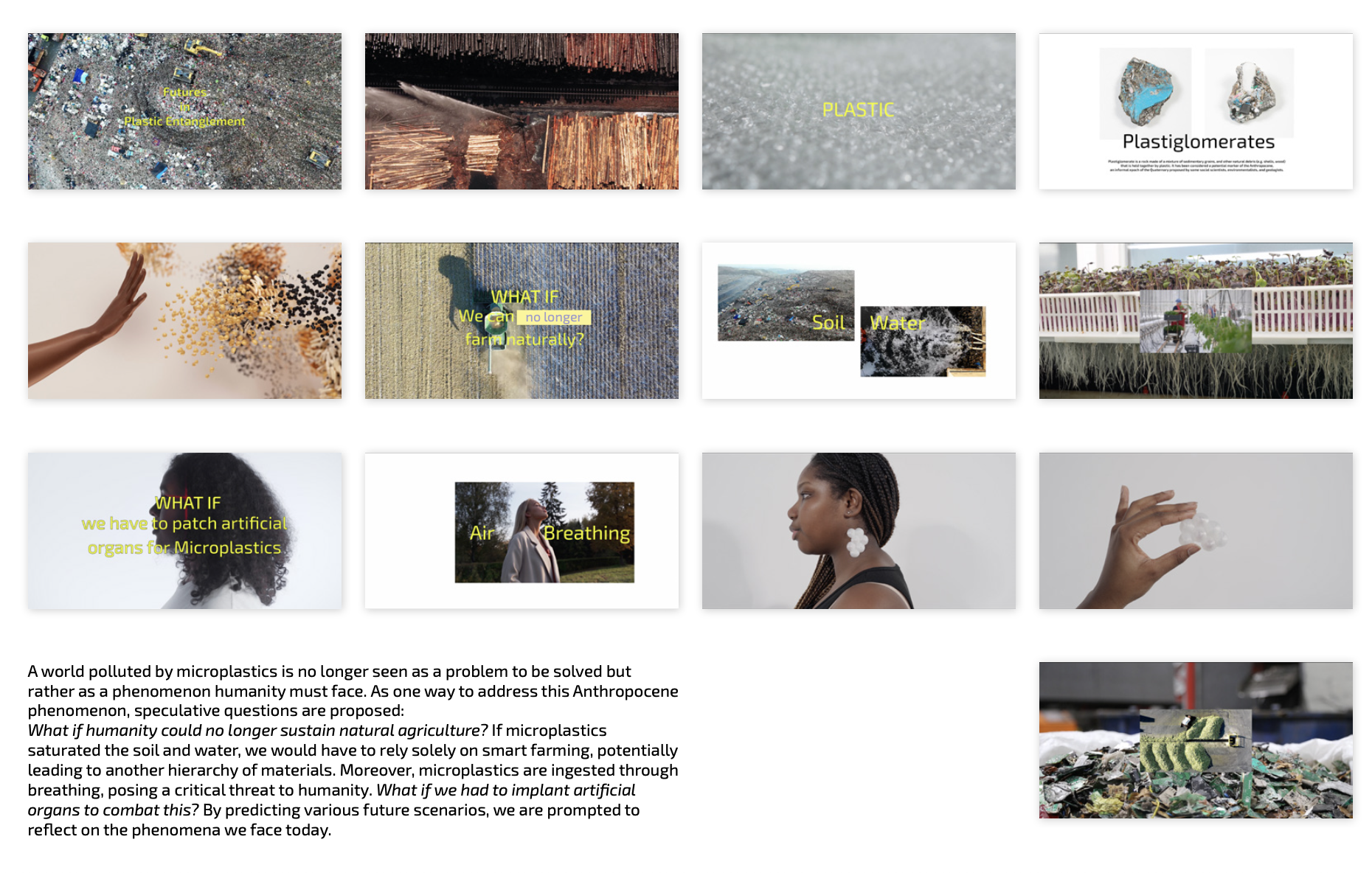
The scenario film brings the roadmap into an imagined everyday world. Smart farming, microplastic filtration, artificial organs, and adaptive infrastructures become ways of living with contamination.
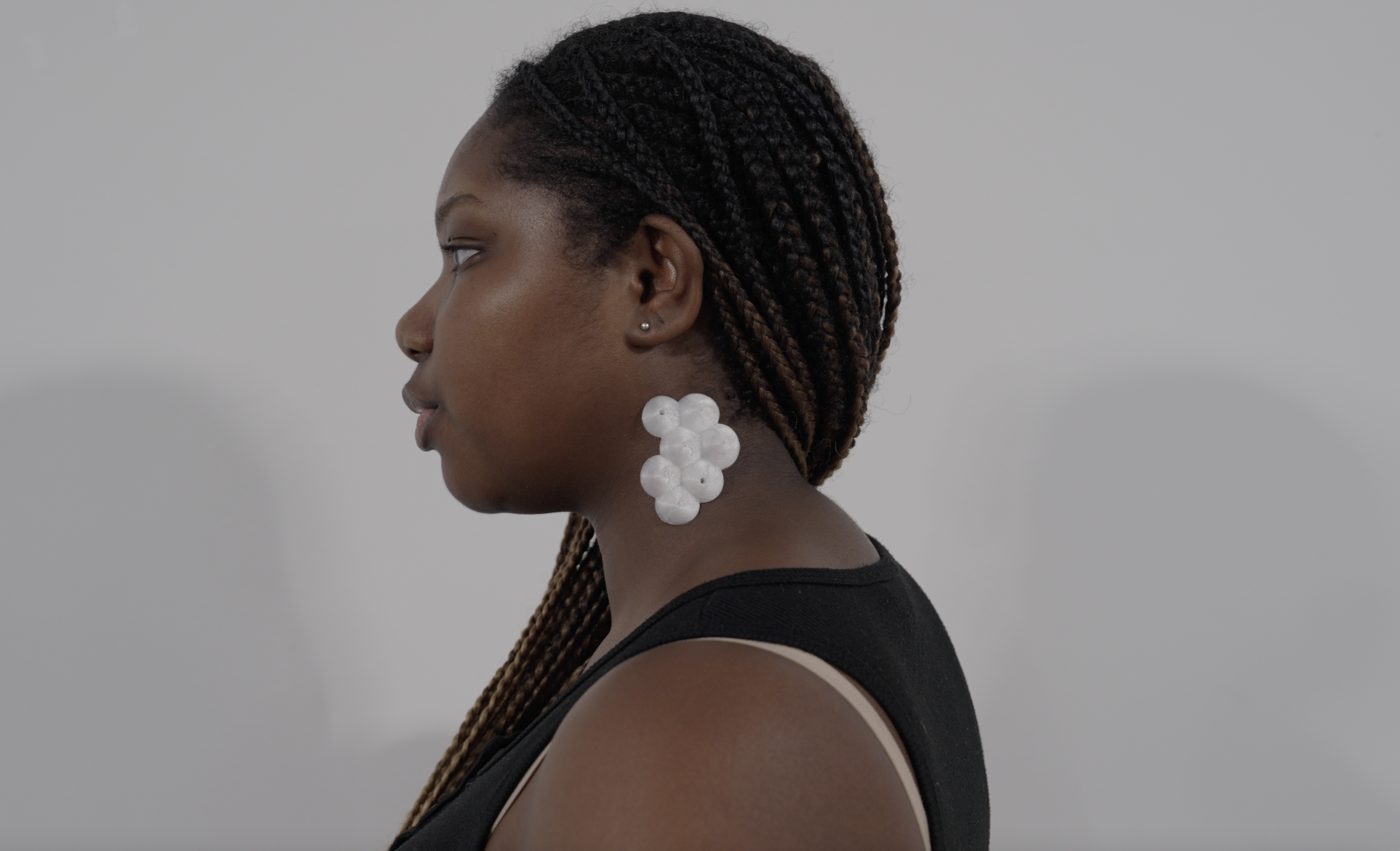
Conceptual objects and their presentation on the body make that scenario tangible. They are research propositions through which to examine bodily adaptation, rather than functioning medical devices.
The film asks what dependencies, inequalities, and material hierarchies could emerge when society manages contamination rather than prevents it. Moving from a diagram to a filmed encounter allows these questions to be approached as lived conditions.
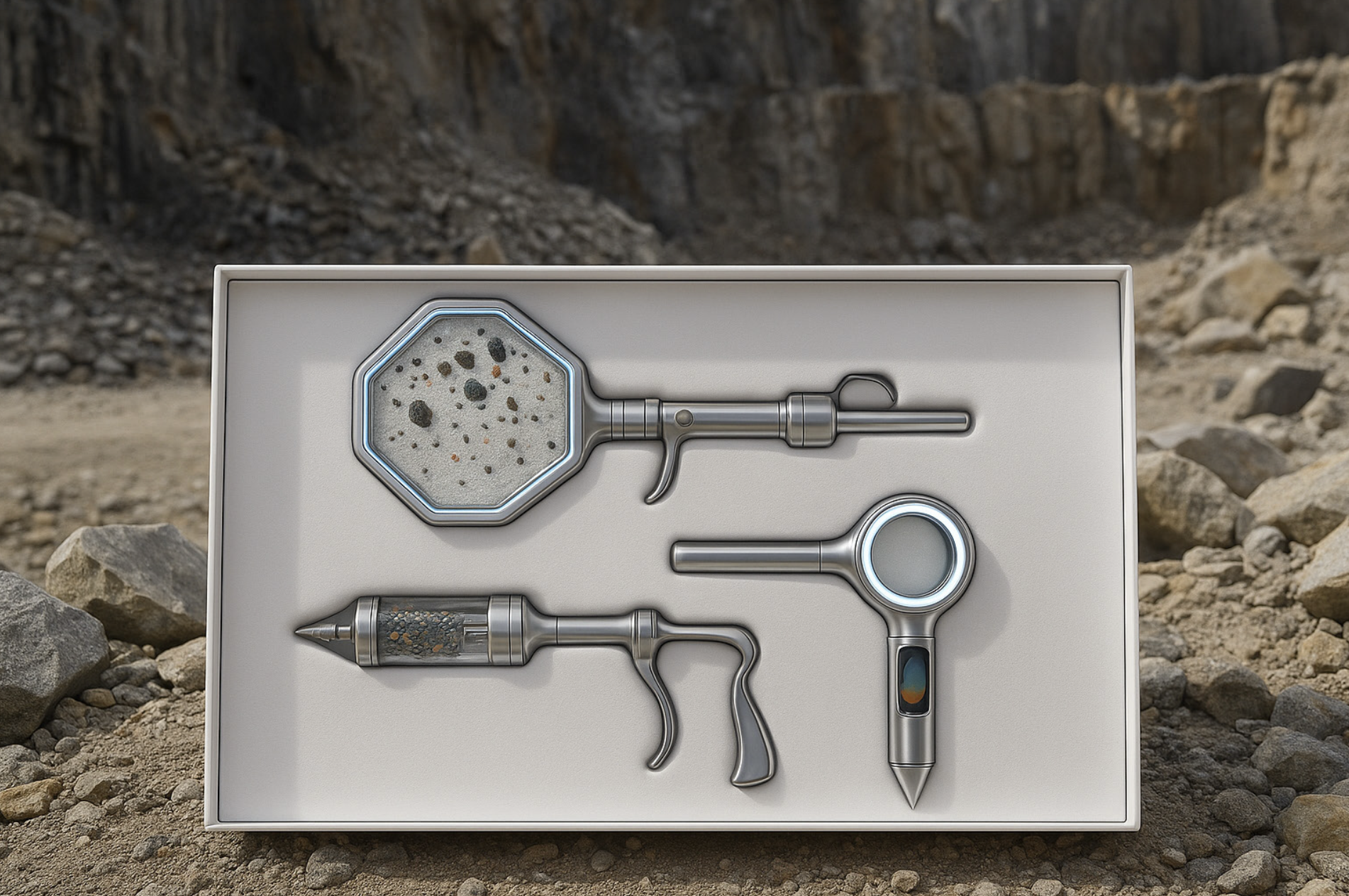
Collecting tools and romantic mineralogy
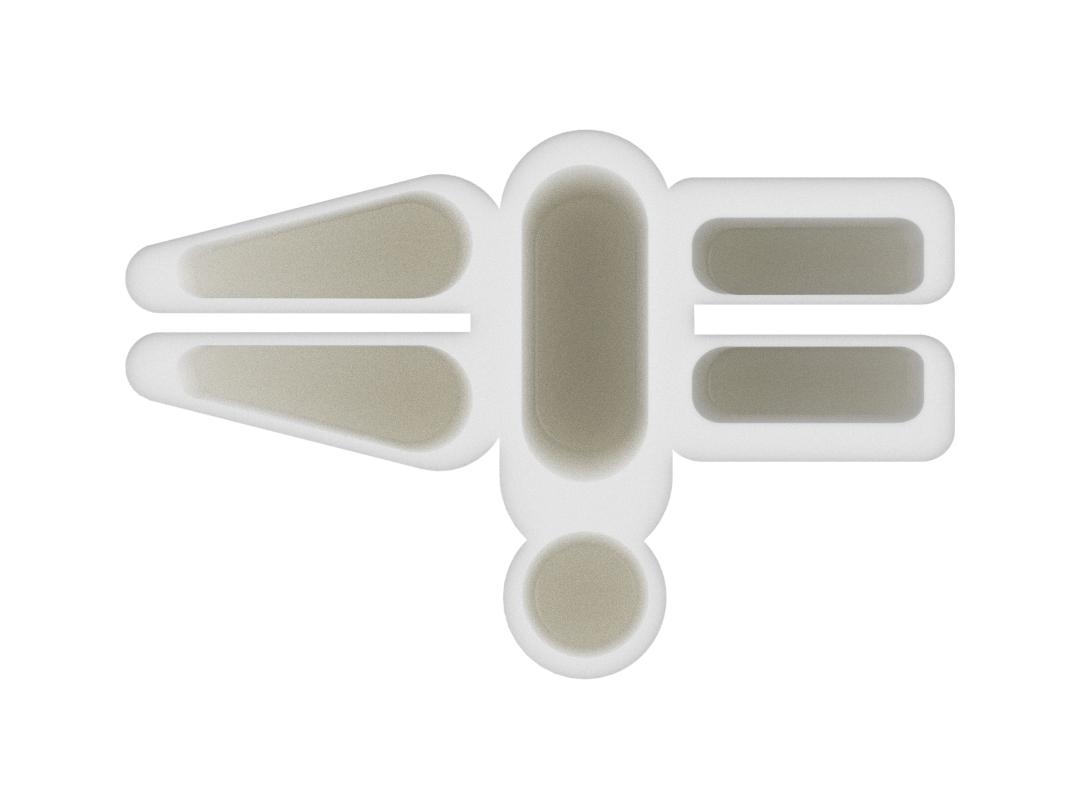
The final extension proposes tools for collecting, classifying, and displaying plastiglomerates and related anthropogenic specimens. It considers them as future geological inheritances.
If rarity has shaped the value of gemstones, what would it mean for plastiglomerates to become more symbolically valuable than diamonds? Their significance would lie in the histories of human desire, industrial residue, ecological damage, and geological time they hold.
The tools extend the archive into a proposed material culture of collecting and classification. They make the question of value tangible: what would people preserve, display, and pass on?
From local observation to public interpretation
The archive makes environmental change observable; bread-making gives it a familiar social language; the roadmap, film, and objects extend it into future conditions. Each format opens a different way to engage with the same material question.
The contribution is a connected approach to material research: moving between physical evidence, cultural interpretation, and design propositions to explore how people might recognise and respond to plastic’s long afterlife.
Project credits
- Research and design
- Hanna Park
- Photographer
- Matthew Lee
- Model
- Dunni
- Academic context
- Royal College of Art, 2024; Materiality & Embodied / Design Resilience